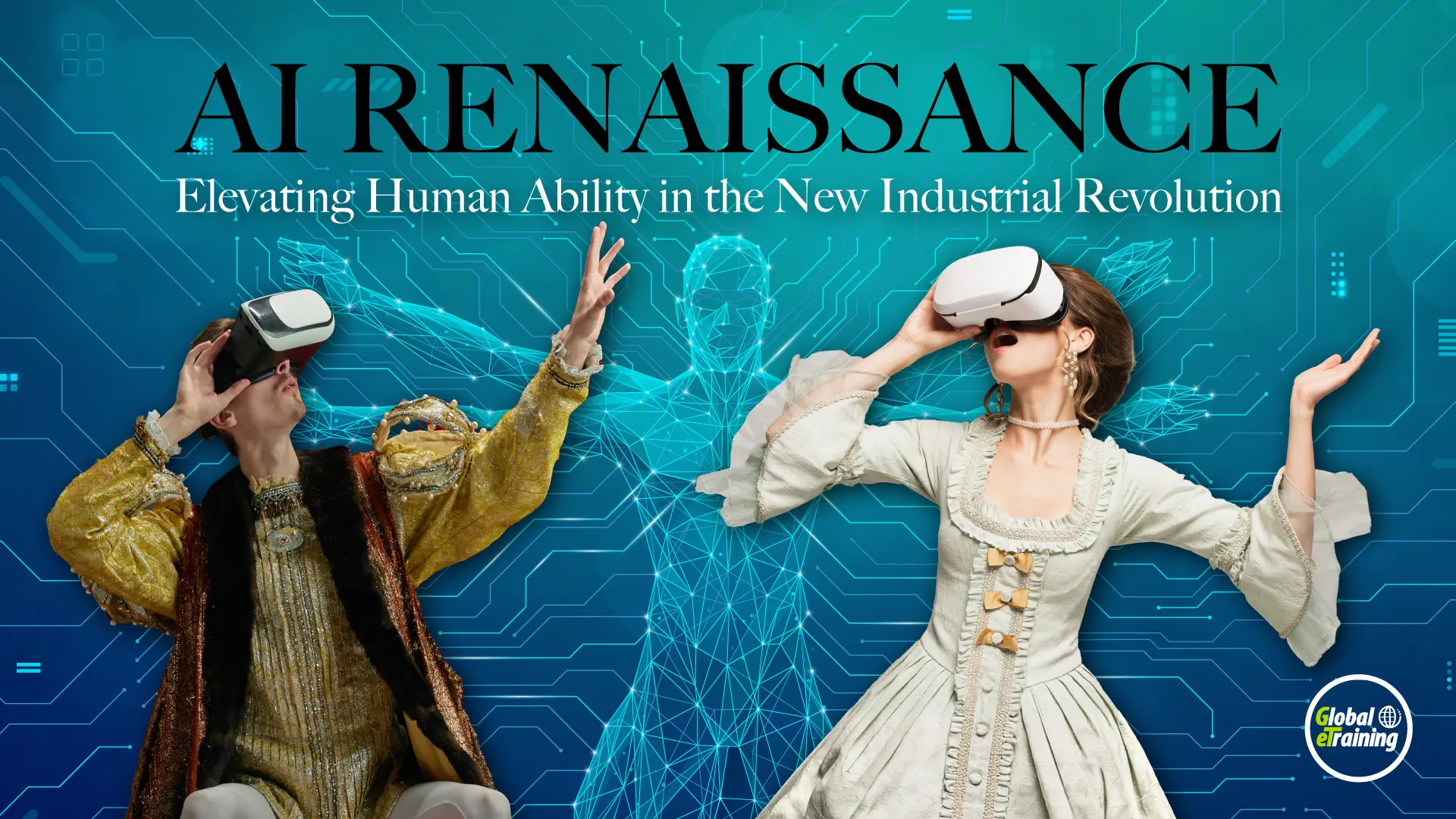
Change is happening faster than we have ever seen, and we are now in one of the most significant shifts of this century, on par with the printing press and on par with the internet.
Every major revolution unlocks access to knowledge, but access alone is not enough.
It is not knowledge until it is understood, it is not valuable until it is learned, and it does not drive outcomes until it is applied in real work.
This is where organizations are struggling today.
The Real Gap: Capability, Not Technology
Across industries such as AECO and manufacturing, the challenge is becoming increasingly clear, demand is growing yet the biggest constraint is not opportunity, but people.
According to the KPMG Global Construction Survey, more than 55% of construction leaders identify skilled labor shortages and capability gaps as one of their top challenges, even as organizations continue to invest heavily in BIM, AI and digital tools to meet future demand.
Yet the real gap is not technology but the ability to use it effectively.
Despite major investments, many teams still struggle to translate tools into real productivity gains, which leads to slower projects, extended timelines and impacted ROI. The issue is not access to innovation but the ability to turn knowledge into action.
This challenge is well captured by Martec’s Law, where technology changes exponentially while organizations change slowly, and the gap between the two continues to widen.
The question is no longer whether organizations will adopt new technology, but whether they can accelerate human capability fast enough to keep up.
Rethinking Training for a Quickly Evolving Industry
This requires a fundamental shift in how organizations approach training, including how people learn, how they unlearn and relearn, how knowledge is captured, how it is shared and how it is applied in real work.
Competitive advantage is no longer defined by access to technology but by the ability to adapt to it.
The real advantage lies in the ability to capture, share, understand and apply knowledge instantly while keeping it continuously up to date, because in fast-moving environments, knowledge cannot remain siloed or live only in people’s heads; it must be embedded within systems that keep it relevant, accessible and usable in the flow of work.
This is the foundation of digital adoption.
Organizations increasingly recognize that transformation depends on people, not just tools, which is why 76% of firms now identify workforce development as their most important priority over the next 12 months, reinforcing that technology investments only deliver value when the workforce has the skills to use them effectively.
A New Model for Applied Knowledge
This is where a new approach to training becomes essential.
Global eTraining is focused on defining and designing training for the 21st century, not as static content but as a living knowledge ecosystem that scales knowledge across teams, accelerates digital adoption and connects learning directly to real outcomes.
Within Global eTraining’s model, learning becomes embedded in the way work actually happens, making it company-specific, project-specific and role specific, while also being delivered at the right moment it is needed. By aligning training with real workflows and incorporating an organization’s own standards, processes and materials, knowledge becomes more relevant, more immediate and more likely to be applied.
At the same time, this approach is strengthened by the depth of industry knowledge available across Global eTraining’s broad AECO and manufacturing library, combined with the ability to continuously evolve and adapt as technology, workflows and requirements change. The result is a system where learning is not separate from work, but integrated into it in a way that keeps knowledge current, contextual and usable.
Because information is not value, applied knowledge is. Without the systems to support it, knowledge becomes fragmented and lost, but with the right infrastructure in place organizations can move faster, stay aligned and apply skills where they matter most.
Keeping Pace with Continuous Change
As workflows, technology and processes continue to evolve, knowledge must evolve with them, and the organizations that succeed in this new industrial revolution will be those that invest not only in technology but in the ability of their people to use it effectively.
To learn how to accelerate digital adoption, scale knowledge across teams, and ensure your organization keeps pace with this fast-changing environment, connect with Global eTraining here.