
Global eTraining Response to Autodesk 2026 State of Design and Make
The latest Autodesk 2026 State of Design & Make: AI Pulse report confirms what many organizations are already experiencing firsthand: AI adoption is accelerating rapidly across AECO, manufacturing and infrastructure industries. But while nearly every company is investing in AI, far fewer are fully prepared to operationalize it successfully.
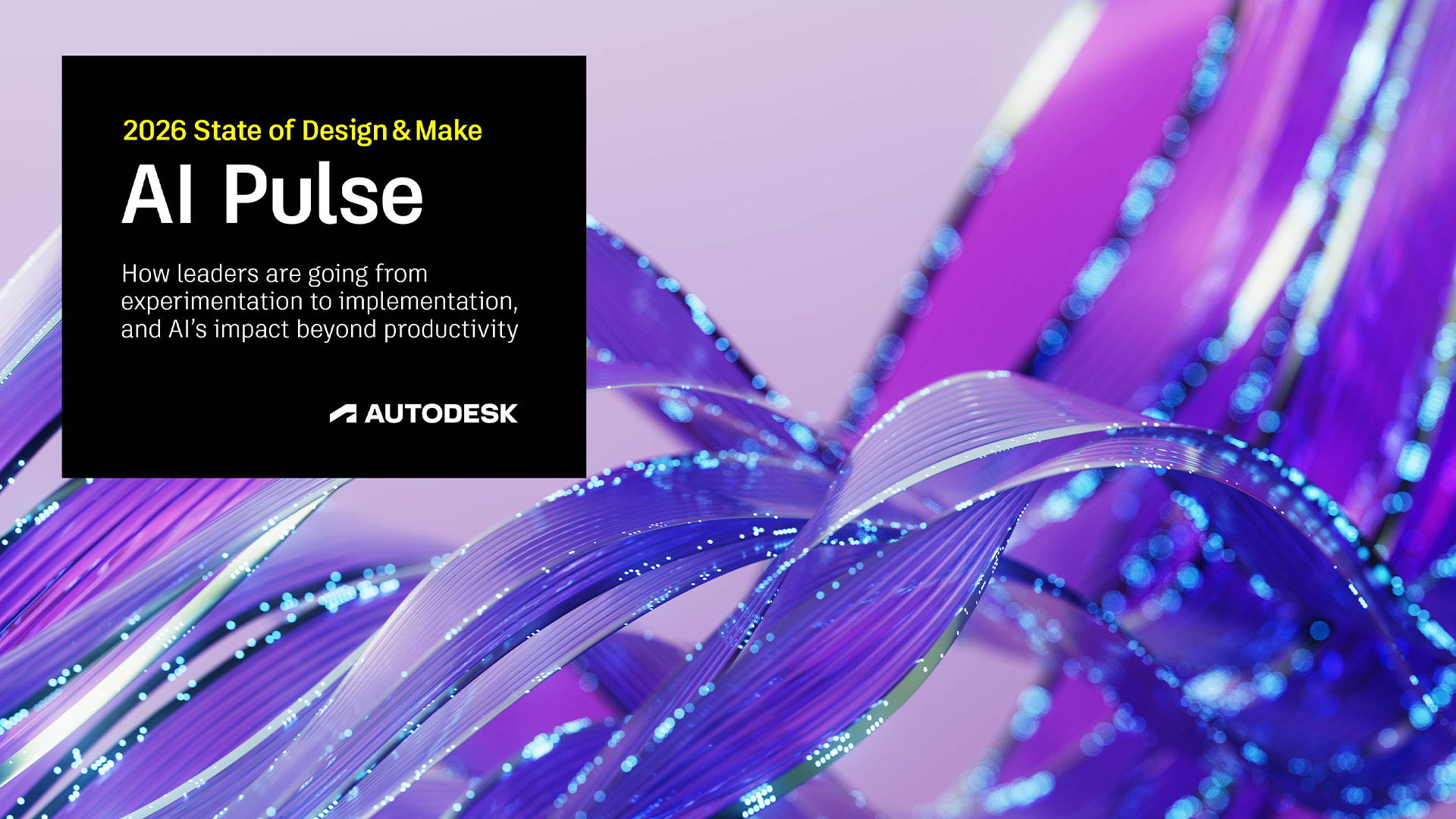
According to Autodesk’s latest research:
- 98% of industry leaders are already using AI tools
- 84% report increased productivity from AI
- 59% are already implementing or planning to implement agentic AI within the next year (Autodesk)
This is no longer experimentation, this is operational transformation.
But the data also reveals something critically important:
The organizations seeing the greatest success are not simply adopting AI faster. They are integrating it more effectively across their teams, workflows, and processes. (Autodesk)
That distinction matters.
At Global eTraining, we believe the biggest barrier to digital transformation is no longer access to technology. It is workforce readiness.
The Skills Gap Is Becoming an Execution Gap
Across the industries we serve, firms are facing the same challenges:
- Rapid technology change
- Growing digital skills gaps
- Aging workforces and retirement risk
- Difficulty onboarding new talent
- Fragmented workflows and inconsistent standards
- Resistance to technology adoption
- Pressure to do more with fewer experienced resources
At the same time, organizations are trying to deploy increasingly sophisticated technologies including AI copilots, automation platforms, connected data environments and agentic AI systems.
The problem is that technology alone does not create transformation, people do.
Many firms have invested heavily in software, but adoption remains inconsistent because teams lack the time, structure or support needed to build confidence and competency at scale.
That is where workforce enablement becomes mission-critical.
The problem is that technology alone does not create transformation, people do.
Why Traditional Training Models No Longer Work
Historically, training has often been treated as a one-time event:
- Attend a workshop
- Watch a webinar
- Complete onboarding
- Move on
But today’s pace of change makes that model obsolete.
Modern organizations require continuous learning ecosystems that evolve alongside their workflows, software, standards and business priorities.
Employees need:
- Learning in the flow of work
- On-demand support
- Practical workflow guidance
- Rapid onboarding
- Standardized processes
- Real-time access to institutional knowledge
- Scalable mentorship and upskilling
The challenge becomes even more urgent as experienced professionals retire, taking decades of knowledge with them.
Without systems to capture and transfer that expertise, organizations risk losing operational consistency, productivity and project readiness.
The challenge becomes even more urgent as experienced professionals retire, taking decades of knowledge with them.
From Knowledge Loss to Knowledge Scale
This is exactly why Global eTraining was built.
Our mission has always been to help organizations:
- Close digital skills gaps
- Accelerate digital adoption
- Standardize workflows
- Preserve institutional knowledge
- Verify project readiness
- Scale workforce development efficiently
Through our AI-centric learning and knowledge platform, organizations can transform existing SOPs, workflows, project standards, videos, PDFs and subject matter expertise into searchable, interactive, continuously updated training systems.
Instead of knowledge being trapped in:
- individuals,
- disconnected documents,
- or siloed departments,
it becomes scalable across the enterprise.
That means faster onboarding, improved consistency, reduced rework and stronger long-term resilience.
AI Success Depends on Human Enablement
One of the most important takeaways from Autodesk’s 2026 AI Pulse research is this:
Competitive advantage is shifting away from simply having access to AI tools and toward the ability to apply them effectively across systems, processes, and teams. (Autodesk)
That aligns directly with what we are seeing across the market. The firms achieving the greatest ROI from AI and digital transformation are the ones investing equally in:
- workforce readiness,
- operational adoption,
- and scalable learning infrastructure.
Because AI without enablement creates friction. AI with enablement creates transformation.
Because AI without enablement creates friction. AI with enablement creates transformation.
The Future Belongs to Learning Organizations
As industries continue evolving, the winners will not necessarily be the organizations with the largest technology budgets.
They will be the organizations that can:
- adapt faster,
- onboard faster,
- transfer knowledge faster,
- and enable their people faster.
The future of digital transformation is not just about software; it’s about empowering people to succeed with it.
At Global eTraining, we are proud to help organizations bridge that gap every day. Let’s talk about how we can help your team do the same.
The future of digital transformation is not just about software; it’s about empowering people to succeed with it.
About Global eTraining
Global eTraining helps AECO and manufacturing firms worldwide close skills gaps, confirm project readiness and accelerate digital adoption with the industry’s leading AI-powered online training platform.
Our platform enables organizations to rapidly build custom company and project workflow training up to 12× faster, ensuring the right teams receive the right training at the right time. Using our patented course-building technology, companies can combine their own materials and SOPs with AI and pre-existing Global eTraining content from the industry’s largest training library to create highly targeted learning programs.
Courses can be edited, translated, tracked and continuously updated with auto-sync capabilities across one or multiple Learning Management Systems, enabling consistent training for internal teams and across entire projects, including sub-trades and supply chains.